WasABI
Development of modular water treatment for sustainable aquaculture
Funding Programme
Federal Agency for Agriculture and Food
Background
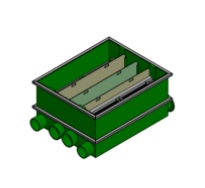
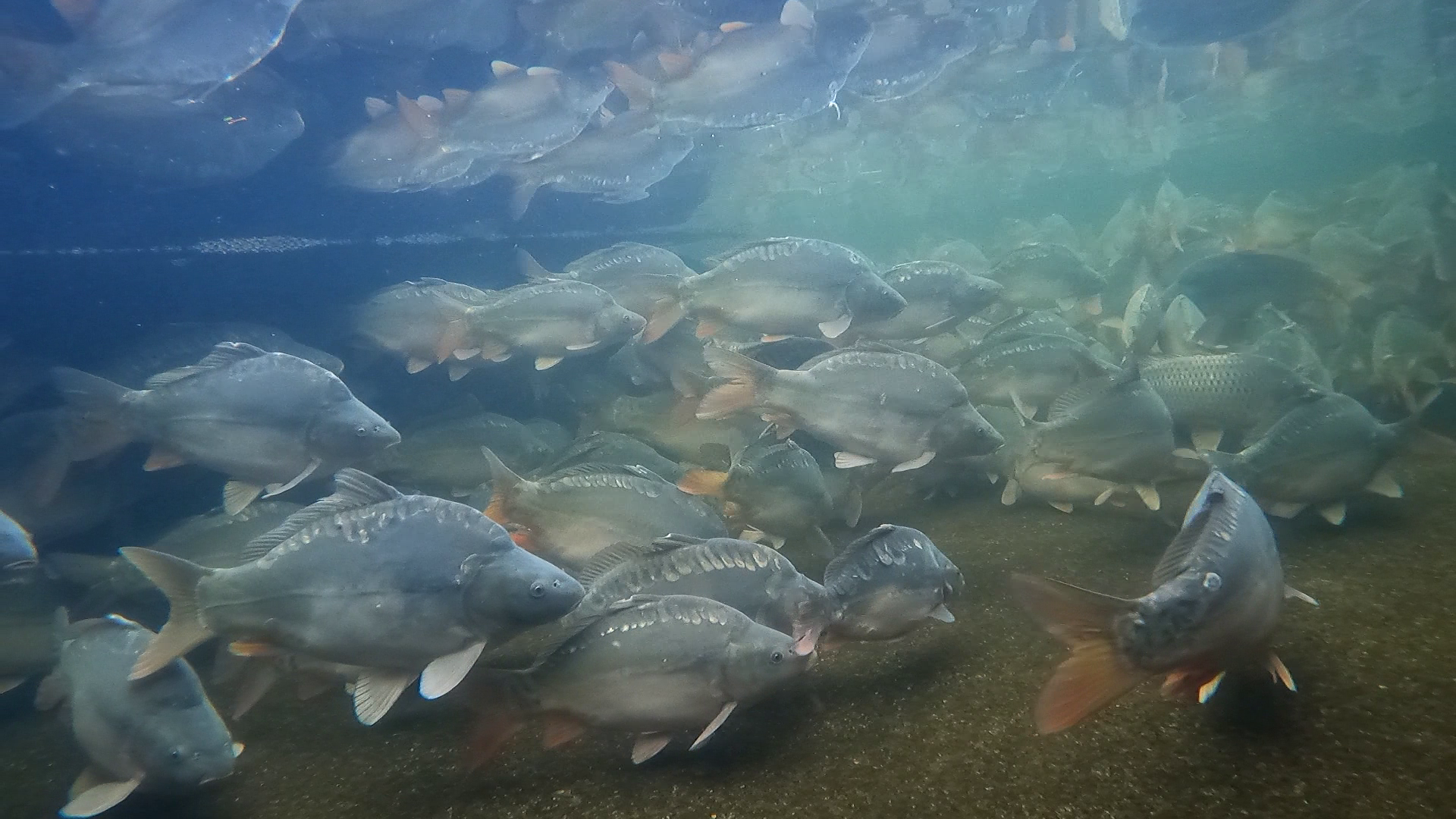
Development and demonstration of a modular, container-based water treatment system to enhance the sustainability of aquaculture, leading to integrated multitrophic aquaculture with oxidative sanitization, as well as integration with biogas plants for cascaded waste utilization and mutual temperature regulation.
As part of the project, synergies between different production systems—particularly aquaculture and biogas utilization—are scientifically investigated. Using computer models and experimental results, concrete recommendations can be made regarding the use of modular water treatment systems and the efficient utilization of residual materials in biogas plants. An integrated energy management system supports the planning of new biogas plants in close proximity to aquaculture facilities, which can serve as heat consumers. The goal is to make it easier for operators of existing plants to comply with wastewater standards and to enable the reuse of water for multiple purposes.
Objectives
The goal of the project is to integrate a container-based water treatment system—still under development—into traditional aquaculture facilities, among other settings, in a space-saving and cost-efficient manner. This modular water treatment system is intended to enable operators of existing facilities to meet the necessary quality requirements for discharged wastewater and to reuse the water multiple times. A computer model to be developed will enable system-specific scaling. Wastewater treatment focuses on mechanical purification, biological purification in the form of nitrification and denitrification, and sanitization using innovative photocatalytic oxidation or oxidation via a diamond electrode. Two additional treatment options are nutrient removal using a hydroponic component for plant production and the use of the module's organic residues (e.g., aquaculture sludge and hydroponic residues) in biogas plants. The computer model can use integrated measurement and control technology to monitor water quality and, based on this, manage the water flow through the treatment stages.Through computer modeling and based on experimental results, it is possible to provide targeted recommendations for the use of water treatment containers and for the efficient utilization of residual mater ials in biogas plants; forthermore, thanks to the integrated energy management system, these plants can serve as heat sinks in the immediate vicinity of aquaculture facilities during the planning of new biogas plants. Such a "plug-and-play" system with an integrated water and energy management model—which can be applied to a wide variety and range of aquaculture systems—improves both the ecological footprint of traditional aquaculture and self-sufficiency in sustainably produced food in Germany and worldwide. At the same time, it can strengthen the decentralized supply of renewable energy.
Project Partners
bue Anlagentechnik GmbH; PPU Umwelttechnik GmbH; Magdeburg-Stendal University of Applied Sciences; Lindbergmühle Fisheries Training and Demonstration Centre


Addressed SDGs (Sustainable Development Goals)
Contact Persons
Dr. Harvey Harbach
Research Group Leader


Projects
More Research Projects

Decision Support System for Sponge-like Corridors
Active
Feasibility study for the development of a decision support system for analyzing the impact of measures for runoff-slowing and water-retaining landscape design
To the Project
Reform of industrial wastewater treatment in Saudi Arabia through demonstration of a3op® technology
Active
To the Project
BIK3I
Active
Condition-based maintenance of small-scale sewage treatment plants using IoT and AI
To the Project


Wasser hoferLand.digital Transfer Workshop
Active
The Water Transfer Workshop connects applied research, digital innovation, and municipal action into a laboratory space
To the Project

ReKorD
Active
Realization of a supra-regional circular economy through fertilizer development
To the Project


DRhN-Booster
Completed
Digital Recruiting for Sustainability – AI-supported educational module
To the Project

TIMEA
Completed
Accelerating the transfer of innovations through web-based multi-level analysis
To the Project
Sponge Balcony
Completed
Sponge Balcony – concept development for innovative evaporation production
To the Project
digi-Sponge (Certificate Course)
Completed
Certificate course on digital methods in sponge city projects
To the Project
Rotary Arc 4.0
Completed
Dynamic sewer network management with obstacle-free control element
To the Project

IntelliFluQs
Completed
Intelligent flow and quality control for the fourth treatment stage
To the Project
ITTQ-Wasser
Completed
Engineering-technical transfer qualification for Bavarian water management
To the Project



pharmIn2
Completed
Efficient treatment of wastewater from the pharmaceutical industry in India
To the Project

InSchuKa4.0
Completed
Combined infrastructure and environmental protection through AI-based sewer network management
To the Project