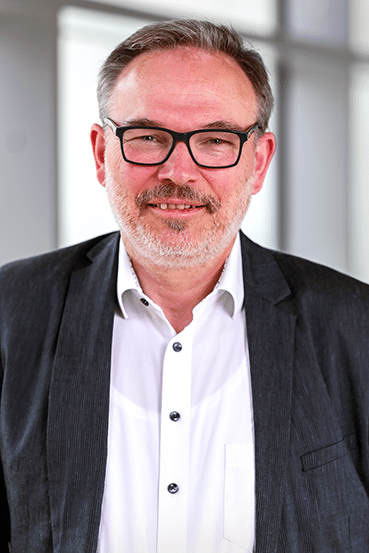
Prof. Günter Müller-Czygan
Head of Research Group


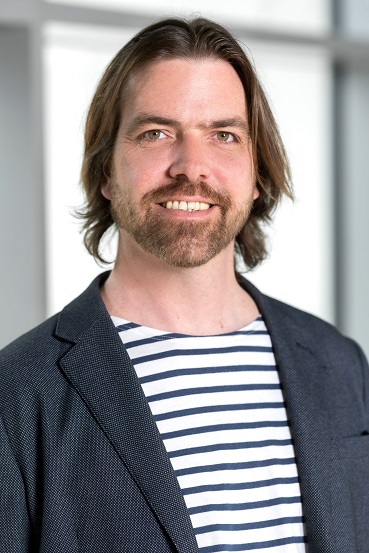
Dr.-Ing. Andreas Aicher
Research Associate
Foundation
ktns was founded on November 15, 2023 during the 3rd Hof Water Symposium and is organizationally affiliated with the Institute for Sustainable Water Systems at Hof University (inwa). The foundation of ktns responds to the needs of municipalities, specialist engineers, architects and urban planners, as well as to demand from companies in Upper Franconia and Bavaria that need to adapt our cities and communities to climate change. Until ktns stands on its own in terms of staffing and financing, ongoing activities will be supported by inwa coordination. Where specialist topics can be assigned to individual research projects, colleagues from the individual inwa research groups provide additional support.
Areas of Work
ktns is intended to cover two essential areas of work: knowledge storage and transfer, as well as consulting and coaching. On the one hand, existing knowledge on sponge cities and sponge regions is to be collected in a web-based knowledge repository and made publicly usable. To bring this knowledge into practice, corresponding transfer is required, including courses, training sessions and lectures, intensive networking, and newly established test fields for practical training. With the second focus on consulting and coaching, ktns aims to close the current gap between solutions and ideas from the knowledge repository and their implementation. These solutions first have to be checked for suitability under local conditions, for example using multi-level analysis, and then adapted to the specific case before municipalities and their planning offices can begin the actual planning. This new type of preliminary assessment and adaptation should take place before the actual service phases and is not included in the regular service phases. ktns aims to support and train municipalities and planning offices until they can carry out this new preliminary assessment and adaptation independently before the actual service phase.
The Sponge City Concept
Water is increasingly becoming a focus of attention, because the effects of climate change are felt primarily through more frequent heavy rainfall and increasingly long dry periods. The sponge city concept, which ktns also extends to the regional level, provides effective approaches for these challenges. The concept provides for rainwater to be collected and retained like in a sponge, for example in open water areas, channels or drainage ditches, infiltration trenches, soil storage systems or special green roofs. Rainwater then no longer flows uncontrolled over sealed surfaces, which prevents or at least reduces flooding. After the rain event, the storage systems are emptied, corresponding to squeezing out the sponge. On hot summer days, the stored rainwater can be used for various applications such as watering plants, saving valuable drinking water.
In particular through two inwa projects, the SPORE project (Smart Sponge Region Upper Franconia, funded by the Upper Franconia Foundation and Hof University, link: spore)and the course “The Path to the Sponge City – Urban Development in Times of Climate Change” (funded by the European Social Fund (ESF), REACT-EU, link: schwammstadt)inwa has analyzed and co-developed various solutions based on the sponge city concept and has already introduced the state of science and technology to more than 60 participants.
In addition to the technical content, sustainability also plays a central role. Together, the high importance of sustainability in sponge concepts was identified and the decision was made to name the new competence and transfer center “sustainable sponge city/region”. Discussions with project participants and course attendees showed that two essential things are currently missing for stakeholders to become capable of acting on sponge city topics: on the one hand, there are many good ideas and application examples, but they are not centrally available anywhere. On the other hand, stakeholders lack the time, experience and suitable roadmap needed to transfer good ideas and examples to their own use case. For precisely this second point, inwa has developed suitable methods that will now be made available to stakeholders through the new competence and transfer center.
ktns is intended to develop into the missing central information hub on the topic of sponge cities in Bavaria and, in the future, beyond. The sponge city concept is also to be extended to rural areas, since these require their own adapted solutions. Therefore, ktns does not only address sponge cities, but also sponge regions in cooperation with agriculture and forestry.
Challenges and Approach
Discussions with stakeholders showed that it is essential to look at necessary climate adaptation measures from different perspectives and to analyze the differing needs of those involved. Particular attention must be paid to ensuring that potential measures are compatible with stakeholders’ everyday work and take increasing task complexity into account. Otherwise, efforts will fail.
For this specific, holistic approach, multi-level analysis was developed as a suitable method for analyzing complexity and everyday work. It has already been thoroughly tested in research projects. Multi-level analysis can identify existing “sponge potential” in cities and municipalities and examine how implementation can ideally take place in everyday work. It is important to pay attention to the right combination of possible measures with other everyday challenges and to uncover synergy potential with other projects and activities through the holistic approach.
This enables cities and municipalities to manage the path toward a water-sensitive city or region more effectively in terms of both finances and personnel. Multi-level analysis is closely linked to the equally holistic approach of sustainability and has already proven highly suitable. It will be used as an important tool in the new ktns. Complexity management and sustainability are therefore two essential and closely linked pillars of ktns. During the research projects, it became clear that Hof University is currently the only research institution attempting to capture the topic of sponge cities and sponge regions in all its complexity from a holistic perspective and, from this position, to develop tools for addressing it effectively and purposefully. The expertise brought together in the competence and transfer center is highly beneficial to Hof as Bavaria’s water competence location.

News and Outlook
At present, the first step is to process inquiries resulting from the two research projects that could not be handled further during the project period. New inquiries have also already arisen from the 3rd Hof Water Symposium, which we will support in the coming months. Over the next two to three years, various test facilities are to be built at the Hof wastewater treatment plant, primarily to be established and operated as part of research projects. In addition, various sponge solutions are to be implemented at the university campus to introduce students to the topic using real objects while also conducting research on open questions.
How ktns develops depends essentially on the financing that can be secured. Further information can be found on the inwa website.
Projects
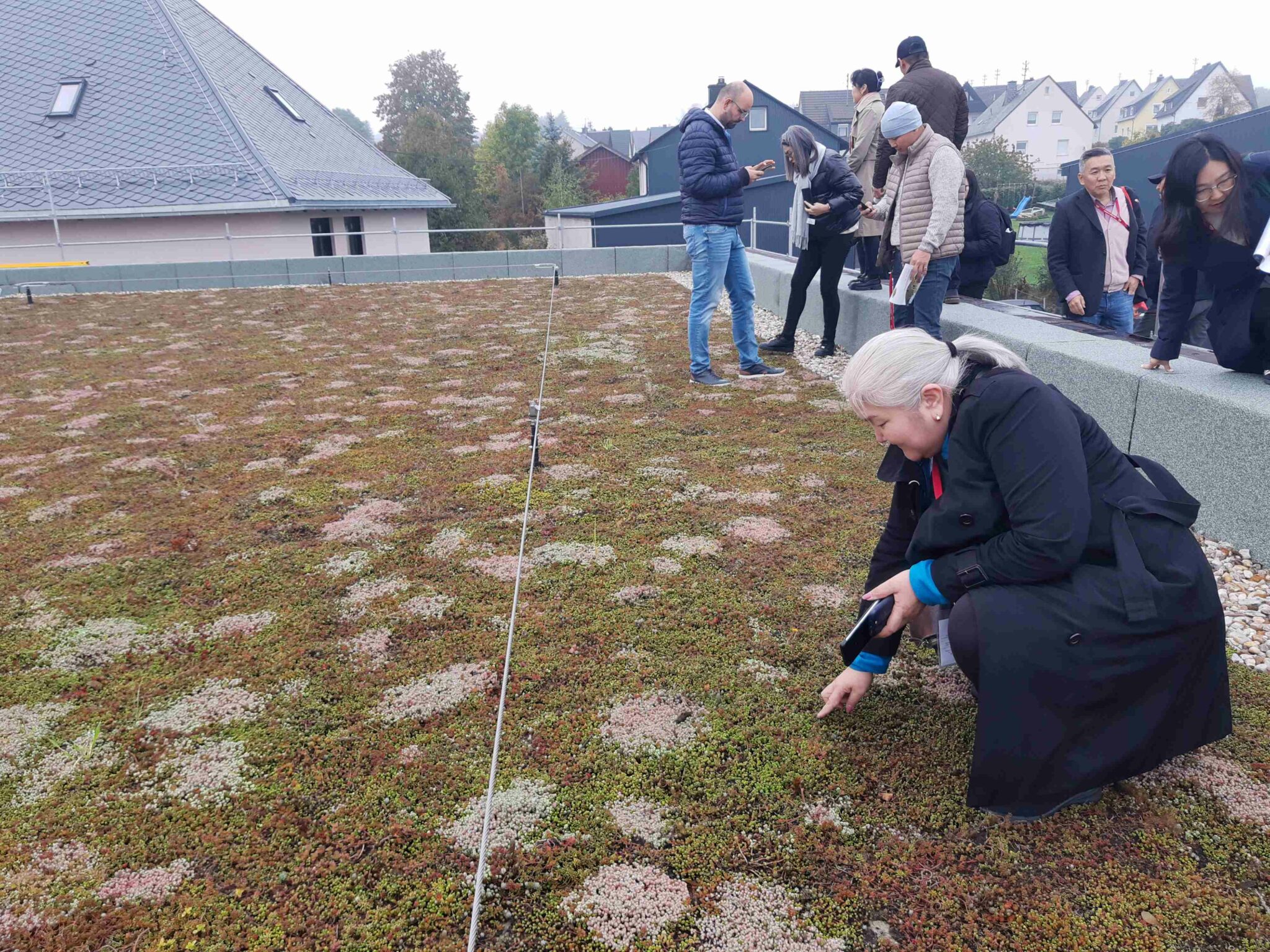
Green Roof in Schauenstein/Upper Franconia
Successful cooperation between companies, the university and municipal institutions.
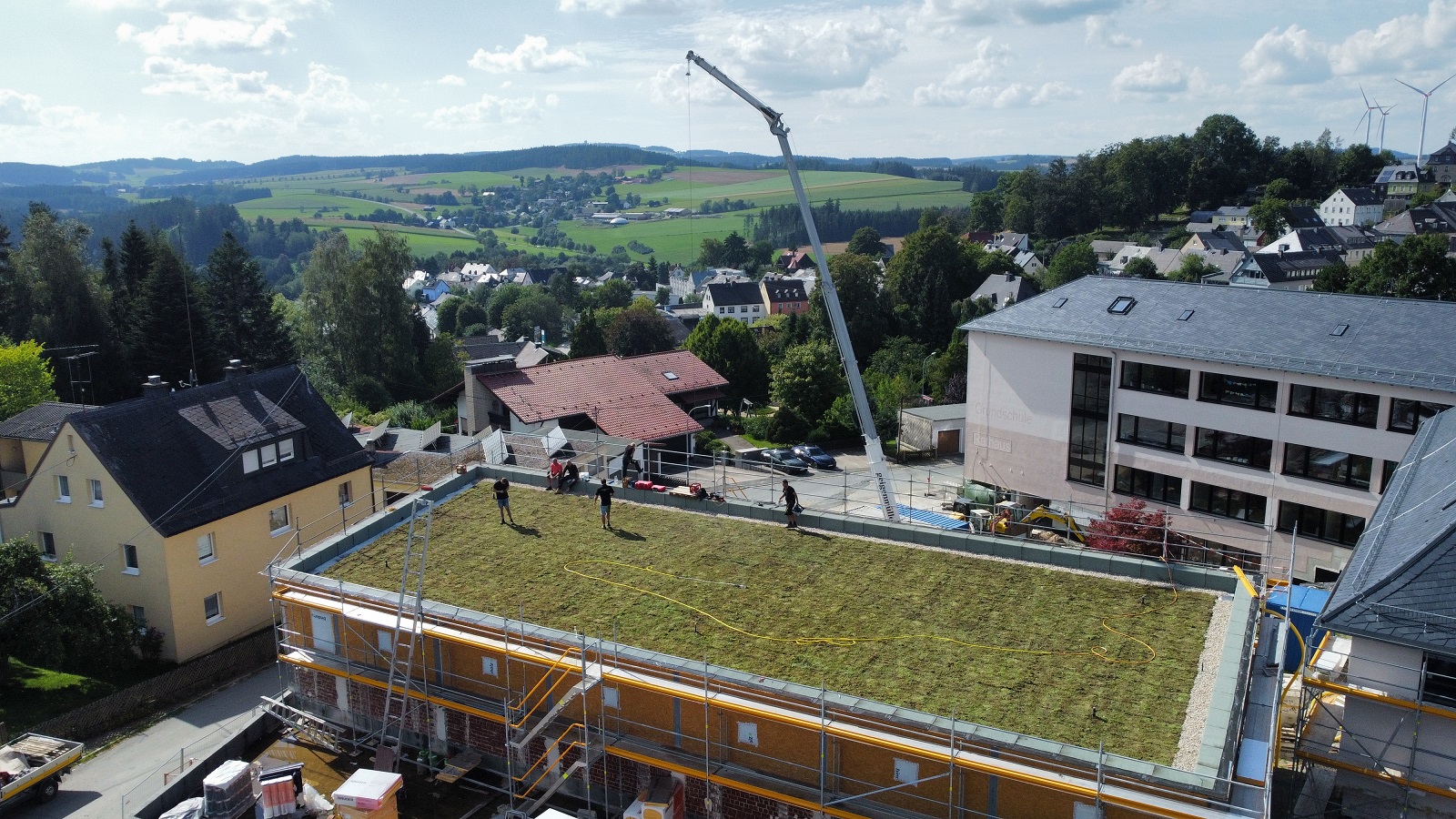
At the Schauenstein primary school, Germany’s first “Detention Roof” was installed: an innovative green roof concept that significantly improves rainwater retention compared with conventional green roofs. This project is part of a comprehensive sponge city project initiated by Hof University and the Water Energy Competence Network.
Browatech GmbH & Co. KG, known for its patented “Tech Drainage”, plays a central role in this project. This ultralight drainage textile, only five millimeters thick, can buffer large amounts of water and release them with a time delay, helping to prevent flooding and reducing the need for large retention basins. This technology is part of the “Purple Roof” concept, known in Europe as “Detention Roof”.
Hof University provides scientific support and analysis for the project through its Institute for Sustainable Water Systems. As part of the SPORE research project, the university is investigating how Upper Franconia can deal with the challenges of climate change, especially heavy rainfall and drought. The project will also explore the role of digital solutions in this context.
This innovative project demonstrates successful cooperation between companies, universities and municipal institutions and represents an important step toward sustainable water use and flood protection.
A cooperation with inwa?
We look forward to your inquiry.