
Foundation
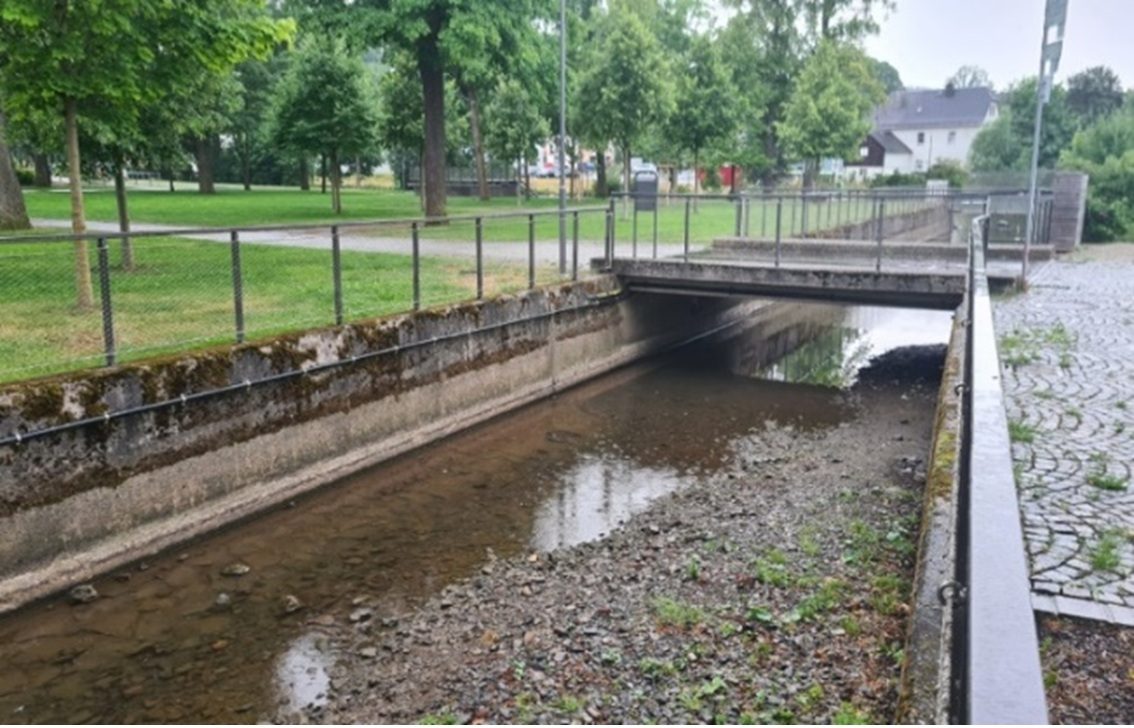
Extreme weather events such as heavy rainfall or drought, which accompany climate change, require our cities and regions to adapt to new challenges. The concept of the sponge city addresses precisely this: cities are designed to capture, store, and reuse rainwater where it falls, rather than quickly channelling it into sewers. Green spaces, green roofs, permeable soils, and infiltration systems act like a "sponge" that stores water, prevents flooding, and simultaneously improves the urban climate. This water is then available when needed, such as during prolonged dry periods.
In rural regions in particular, isolated individual measures are not enough. The idea of the sponge city is therefore extended to the sponge region, to make entire stretches of land resilient and liveable. A network of green, water, and infrastructure elements transforms cities and communities together into a sponge region that recognises and addresses the challenges of this network.
Areas of Work
For this approach, Hof University combines applied research, digital innovation, and close collaboration with municipalities to make water management and climate adaptation feasible not only for large cities but equally for regions such as the Hof area. First, data platforms, digital tools, and intelligent analysis are used to assess water demand, existing water resources, and potential risks. Solutions are developed together that municipalities can implement in their day-to-day work and that practically improve water management.
Our ambition is to thereby create a liveable region that manages water intelligently, keeps nature and settlement in balance, and thus creates a true sponge region characterised by a high quality of life, safety, and sustainability.

A cooperation with inwa?
We look forward to your inquiry.