
Pond Circle
Cross-border promotion of pond ecosystem infrastructure
Funding Programme
INTERREG Bavaria – Czech Republic
Background
Funding Program and Background

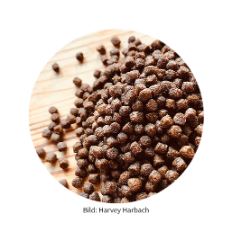
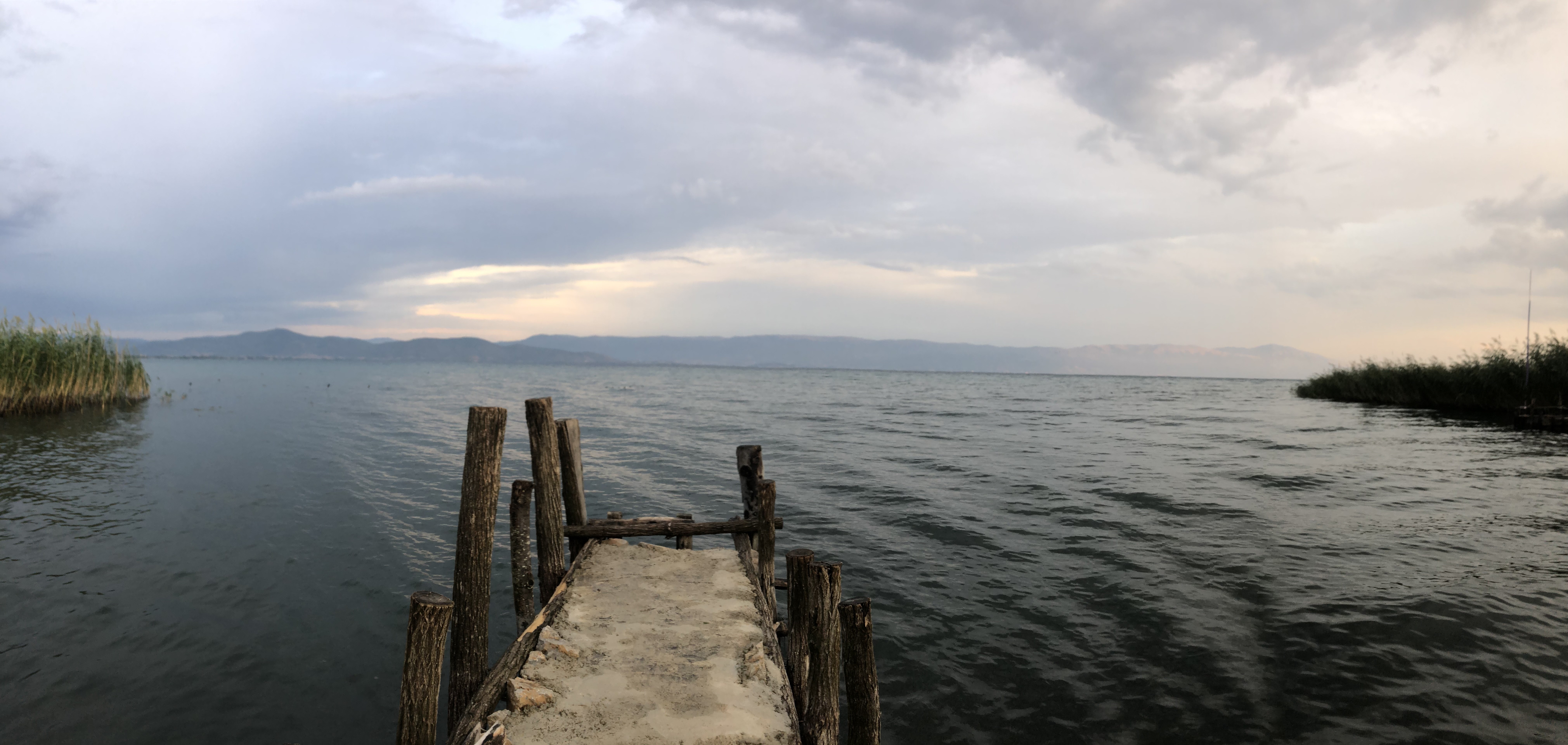
Fish farming in ponds is of great economic, infrastructural and ecological importance in Central Europe. However, climate change is leading to shifts in rainfall patterns and extreme rainfall events, which can impair pond functions, for example due to the build-up of sediment from soil erosion. The nutrients released from the sludge, combined with higher temperatures, trigger algal blooms, oxygen depletion and nutrient emissions. This project aims to reduce eutrophication in ponds using natural nutrient sorbents, which are extracted from the ponds prior to harvesting. The study will investigate the extent to which natural nitrification inhibitors can enhance adsorption. This innovative approach could reduce the build-up of the sludge layer, increase water retention capacity and lead to improved regional water management. The innovation would reduce nutrient emissions into receiving waters (e.g. rivers) and the atmosphere. The nutrient-rich sorbents can be sold as fertiliser, thereby strengthening the circular economy. To address the challenges outlined above, the expertise of the project partners, the target group and regional aquaculture SMEs of varying sizes on both sides of the border is required. Through this collaborative project, a solution can be tested in both regions to derive recommendations for pond areas across the EU and to increase pond farmers' incomes.
Objectives
With the help of natural nutrient sorbents and potential nitrification inhibitors, the build-up of the sludge layer is reduced, enabling ponds to contribute more effectively to regional water managementment. Lower nutrient emissions reduce the burden on transboundary natural water bodies and the air. This contributes to Specific Objective 7, 'Improving the protection [...] of nature [...]', as the near-natural, blue infrastructure of extensive ponds is preserved. These ponds often form the cornerstone of Natura 2000 and FFH sites in the Bavarian-Czech border region and, in some cases, are home to more Red List species than river floodplains. As the silting up of the ponds is reduced, fewer costly land improvement measures are required. Water quality in the ponds and in the receiving waters (streams, rivers) remains at a high standard, enabling sensitive fauna and flora to retain or re-explore their habitat within the ecosystem. SME fish farms can produce more cost-effectively and gain a new source of income.
Project Partners
University of South Bohemia; Czech Republic Angling Association; TEGO – Upper Palatinate Fish Pond Cooperative; Upper Palatinate Fish Producers’ Association; Bavarian State Fisheries Association


Addressed SDGs (Sustainable Development Goals)
Contact Persons
Dr. Harvey Harbach
Research Group Leader


Projects
More Research Projects

Decision Support System for Sponge-like Corridors
Active
Feasibility study for the development of a decision support system for analyzing the impact of measures for runoff-slowing and water-retaining landscape design
To the Project
Reform of industrial wastewater treatment in Saudi Arabia through demonstration of a3op® technology
Active
To the Project
BIK3I
Active
Condition-based maintenance of small-scale sewage treatment plants using IoT and AI
To the Project


Wasser hoferLand.digital Transfer Workshop
Active
The Water Transfer Workshop connects applied research, digital innovation, and municipal action into a laboratory space
To the Project
ReKorD
Active
Realization of a supra-regional circular economy through fertilizer development
To the Project


DRhN-Booster
Completed
Digital Recruiting for Sustainability – AI-supported educational module
To the Project


TIMEA
Completed
Accelerating the transfer of innovations through web-based multi-level analysis
To the Project
Sponge Balcony
Completed
Sponge Balcony – concept development for innovative evaporation production
To the Project
digi-Sponge (Certificate Course)
Completed
Certificate course on digital methods in sponge city projects
To the Project
Rotary Arc 4.0
Completed
Dynamic sewer network management with obstacle-free control element
To the Project

IntelliFluQs
Completed
Intelligent flow and quality control for the fourth treatment stage
To the Project
ITTQ-Wasser
Completed
Engineering-technical transfer qualification for Bavarian water management
To the Project



pharmIn2
Completed
Efficient treatment of wastewater from the pharmaceutical industry in India
To the Project

InSchuKa4.0
Completed
Combined infrastructure and environmental protection through AI-based sewer network management
To the Project