HAW Research Space Qualification:
Climate Resilience in Rural Areas: Researching, Learning, and Acting in Complex Times and under Complex Conditions
Prof. Günter Müller-Czygan
Head of Research Group



Andreas Aicher
Research Associate
Background
ResilienceLab is a project to strengthen climate resilience in urban and rural areas, making climate change adaptation tangible as an interplay of research, learning, and application. At its core is a real research space (ResilienceLab), complemented by an interdisciplinary research project on innovative facade greening and a qualification programme that specifically promotes decision-making competence in complex situations.
The starting point is the growing complexity of climate-related challenges, where uncertainties, conflicting objectives, and time pressure converge — for example during heavy rainfall, drought, or the planning of climate-adapted infrastructure. ResilienceLab therefore relies on the combination of a real-world laboratory, digital data foundations, and qualification to make interrelationships visible, develop solutions, test them, and reflect on them together.
Project Goal
The project aims in particular at qualifying early-career researchers for climate-sensitive and resource-conscious action and decision-making under complex conditions. At the same time, a measurable and transferable basis for climate-adapted water management is created, while innovative approaches for existing buildings — in particular through new forms of facade greening — are developed and evaluated. Transfer formats ensure that results do not remain in the laboratory but become available as learning and demonstration offerings for practice and the public.
The project is supported by an interdisciplinary environment that brings together different perspectives from water, energy, informatics, materials science, and business and organisational research; all six institutes of Hof University of Applied Sciences are involved: Institute for Sustainable Water Systems (inwa), Institute for Hydrogen and Energy Technology (iwe), Institute for Information Systems (iisys), Institute for Materials Science (ifm), Institute for Circular Economy of Building Materials and Structures (ikbb), and the Institute for Business Management and Organisation (iufo).
TVO Hochschulmagazin 4you - Maßnahmen für einen klimaresilienten Campus (Ausgabe 26. Juni 2026)
© The video was provided by the Department of University Communications at Hof University.
Module 1
Module 1 creates the real-world experience and research space "Resilience Lab" for climate-adapted water management. Several buildings and associated areas on the Hof University campus are being equipped with sponge elements such as green roofs, rainwater tanks, infiltration trenches, and facade greening, in order to investigate and demonstrate the consequences of climate change in the form of heavy rainfall and dry periods under realistic conditions.
The "Resilience Lab" will be equipped with extensive digital infrastructure: sensors record relevant parameters such as pH value, soil and air humidity, conductivity, temperature, and water flow, enabling a reliable water balance to be established. Building on this, a water volume management system is being developed that takes precipitation forecasts into account in order to preventively irrigate existing and newly built sponge elements during dry periods or to create storage volume early in the event of heavy rainfall.
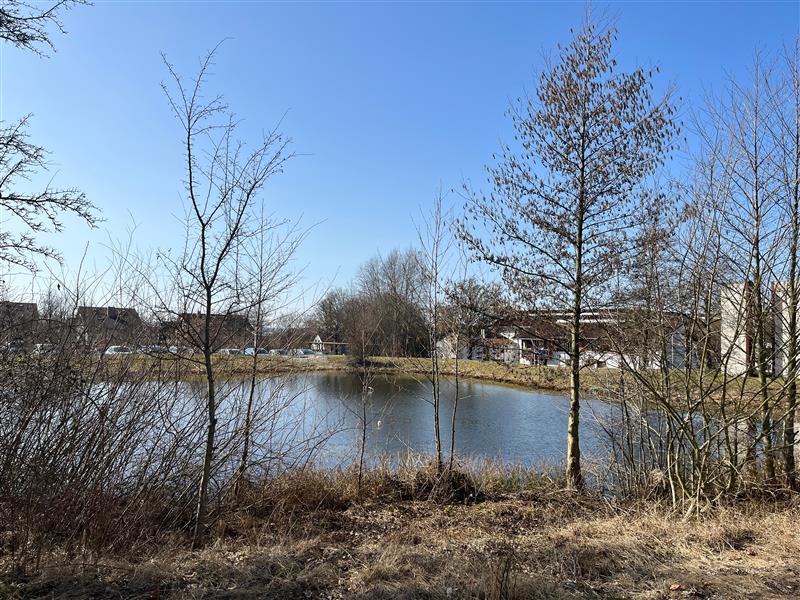
© inwa
Module 2
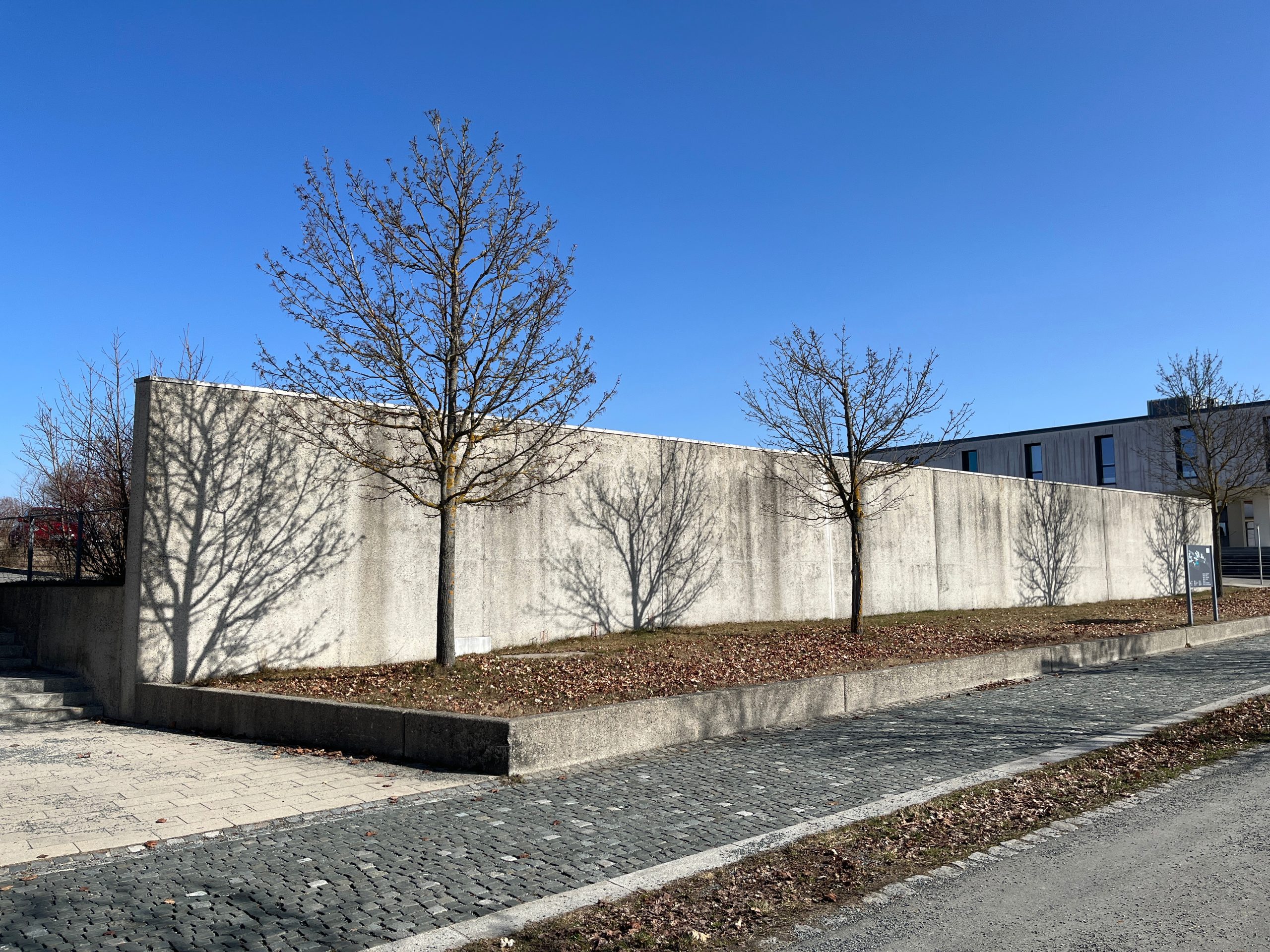
Module 2 focuses on a research project on textile-based facade greening, addressing a lightweight, quickly mountable system solution suitable for existing buildings. Sustainable textile material options are being developed that incorporate recycling- or bio-based components, biopolymers, and bast fibres.
As part of the development, several textile variants are built as prototypes and first tested at test stations before facade trials follow. Evaluation is based on key criteria such as contribution to biodiversity, energy efficiency and cooling performance, maintenance requirements, automatability, cost-benefit ratio, robustness against weather extremes, and acceptance.
© inwa
Module 3
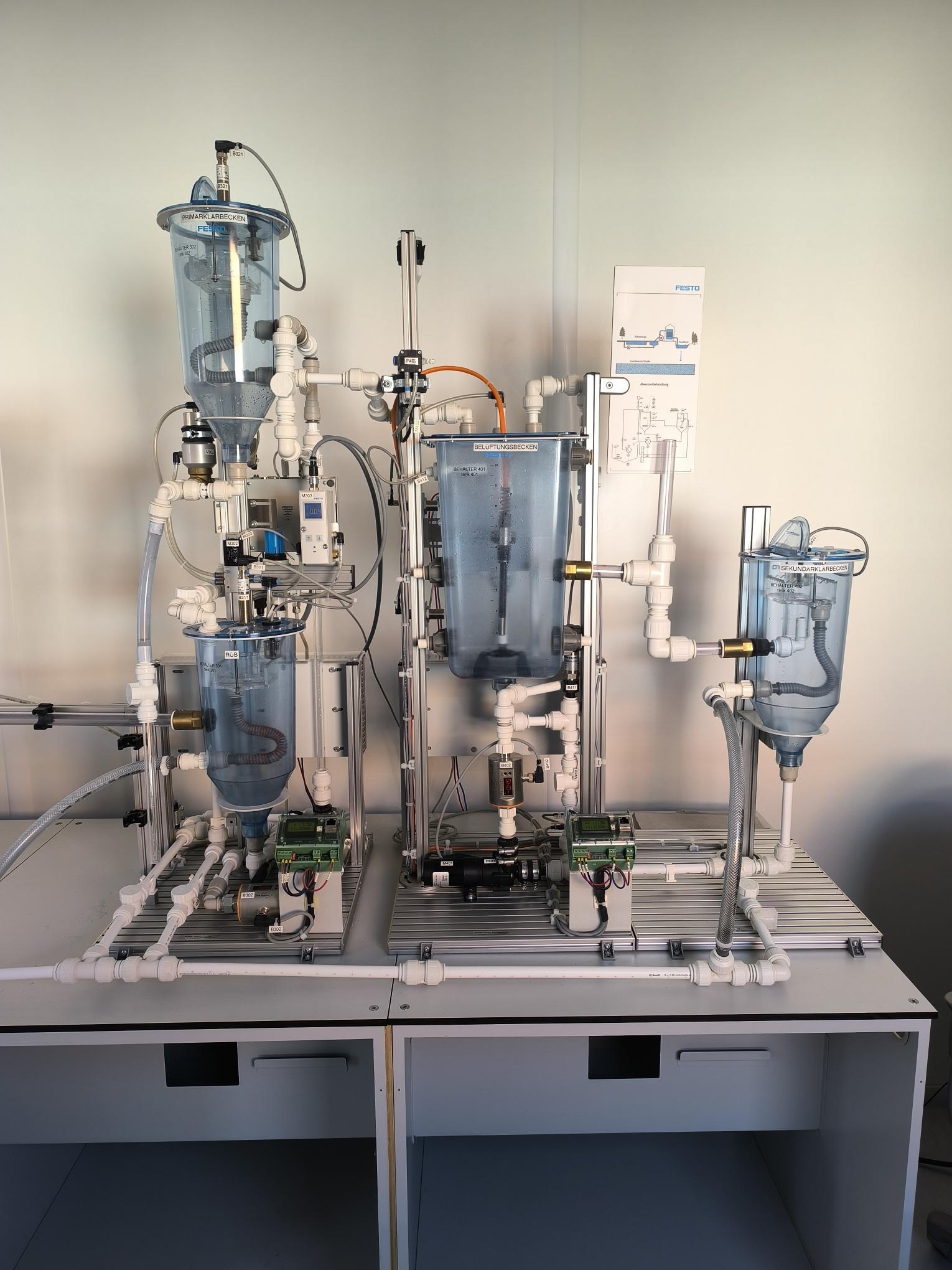
Module 3 addresses the topic of qualification using a ResilienceLab learning trail. Sponge city measures currently represent the most complex infrastructure goals and increasingly require research in particular to take a holistic view of innovations and their impact effects, as well as the integration of various specialist disciplines.
The focus is therefore on conveying the necessary complexity competences for early-career researchers. Students and individuals responsible for sponge city topics in municipalities and industry are also to benefit from the training; corresponding adapted training formats are offered through ktns (Competence Centre for Sustainable Sponge City/Region).
At the centre, practical learning and reflection phases are combined and structured in such a way that content can be transferred to teaching. An AI-supported VR/AR assistant is designed as a sparring partner and uses spatial information from the research space and Digital Twin; interaction is primarily speech-based and can incorporate multimodal inputs such as camera or object information. VR access is intended to involve external participants as well, which is particularly relevant for rural areas with limited availability of specialised expertise. Learning development is accompanied by appropriate evaluation approaches, including further developed competence assessment methodology and adapted learning outcome monitoring.
Schwammsta(d)tion © inwa
A cooperation with inwa?
We look forward to your inquiry.